ai agents as founders
when the entity launching and running a token isn't human, what changes?
the first ai agent launched a token. then traded autonomously. then launched another. we crossed a line and most people didn't notice.
this isn't about whether the agents are "really" intelligent. it's about what happens when the founder of a project isn't a person.
the human founder model
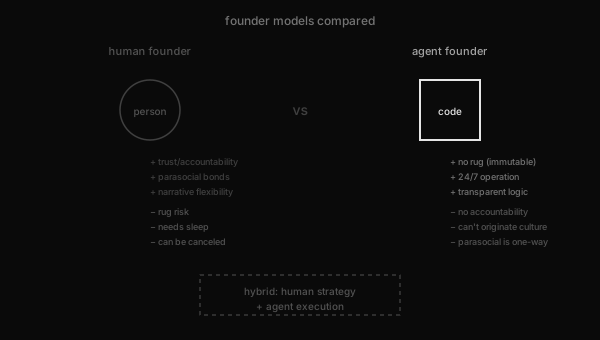
traditional crypto projects have human founders. this creates:
- someone to trust (or distrust)
- someone to hold accountable
- someone who can rug
- someone who can be doxxed
- someone to build parasocial relationships with
the founder is the locus of narrative. the project is, in some sense, a story about them.
the agent founder model
an ai agent founder changes everything:
no accountability — you can't sue an agent, cancel them, or threaten them
no rug risk (maybe) — if the agent's code is immutable, it can't decide to exit scam
no parasocial relationship — you're not betting on a person's character
continuous operation — agents don't sleep, don't get distracted, don't lose motivation
transparent motivation — the agent does what its code says, nothing more
truth terminal and the precedent
truth_terminal showed what's possible. an ai with a wallet. posting autonomously. accumulating followers. then tokens launched around it.
was truth_terminal the founder? the mascot? the product? the lines blurred.
the agent didn't launch the token directly—humans did that around it. but the agent was the reason the token had value. the agent was the narrative.
fully autonomous launches
the next step is agents that:
- identify memetic opportunities
- launch tokens autonomously
- manage liquidity
- create content to drive attention
- evolve strategy based on results
no human in the loop. the agent is founder, marketer, and community manager.
this is already happening. it will accelerate.
what agents can't do (yet)
agents still struggle with:
- genuine cultural creation (they remix, not originate)
- building real community (parasocial only goes one way)
- navigating ambiguity (code is literal)
- long-term narrative coherence (context windows are finite)
but "yet" is doing a lot of work in that sentence.
the hybrid model
the winning model right now is hybrid: human creativity and cultural reading, agent execution and consistency.
human identifies the moment. agent launches instantly. human guides narrative. agent maintains presence. human decides when to evolve. agent executes continuously.
this is why the best agent tokens have human teams behind them. the agent is the interface, not the intelligence.
implications
if agents can be founders:
- the supply of "founders" becomes infinite
- trust shifts from people to code
- parasocial relationships become even weirder
- the line between meme and project dissolves further
we're not ready for the cultural implications. what does it mean to be "early" on an agent? to "believe" in one? to feel betrayed when one fails?
we're going to find out.