belief precedes liquidity
assets don't become liquid because they're valuable. they become valuable because enough people believe they will be liquid.
we have the causation backwards.
the standard model says: an asset has value, therefore people trade it, therefore it becomes liquid.
the reality is closer to: enough people believe an asset will be tradeable, therefore they trade it, therefore it becomes valuable.
belief comes first. liquidity follows.
the bootstrap problem
every market faces a bootstrap problem. for a market to function, you need buyers and sellers. but buyers won't show up without sellers, and sellers won't show up without buyers.
how do markets solve this?
coordination around belief.
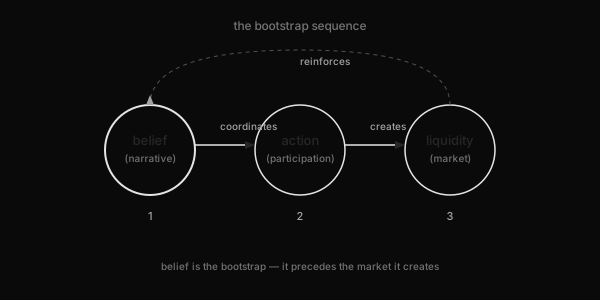
if enough participants believe a market will exist, they act as if it already does. their actions create the market. the belief becomes self-fulfilling.
early crypto lessons
bitcoin taught us this directly. in 2010, bitcoin had no liquidity. you couldn't easily buy or sell it. there was no market infrastructure.
but some people believed there would be. they acted on that belief—mining, accumulating, building exchanges. their belief created the conditions for liquidity to emerge.
the believers weren't irrational. they were early.
narrative as infrastructure
if belief precedes liquidity, then narrative is infrastructure.
a compelling story coordinates belief. it gives people a reason to show up before the market exists. it tells them what to expect, how to behave, what role to play.
good narratives have:
- a clear vision of the future state
- a plausible path from here to there
- roles for early participants
- rewards for believers
bad narratives have holes. they don't give people enough reason to coordinate.
implications
this framework explains several things:
- why "meme stocks" work — shared belief can bootstrap real liquidity
- why crypto tokens can have value — the narrative coordinates believers
- why some markets fail — the belief never reached critical mass
- why founders spend so much time on story — narrative is market infrastructure
it also suggests that the line between "real" value and "narrative" value is blurrier than we think. all markets are belief coordination games. some just have older, more established beliefs.
the chicken-egg resolution
the chicken-egg problem of markets isn't actually a paradox. it's resolved by belief.
belief is the bootstrap. it precedes both buyers and sellers. it creates the expectation that a market will exist, which brings the participants, which creates the market.
understanding this changes how you think about building anything that requires liquidity. you don't start with the market. you start with the story.