liquidity follows narrative
capital doesn't flow to the best assets. it flows to the best stories about assets.
watch where liquidity goes and you'll see a pattern.
it doesn't flow to fundamentals. it doesn't follow analysts. it follows stories.
the attention-liquidity pipeline
i've been thinking about attention markets for years now. but there's a layer i missed earlier: attention and liquidity are connected.
the pipeline looks like this:
- narrative captures attention
- attention creates perceived opportunity
- perceived opportunity attracts capital
- capital creates liquidity
- liquidity validates the narrative
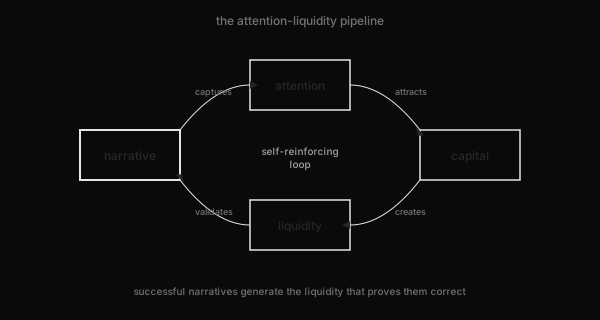
this is a loop, not a line. successful narratives become self-reinforcing. the liquidity they generate becomes proof that the narrative was correct.
narratives as coordination
think about what a narrative does. it tells people:
- where to look
- what to expect
- how to participate
- when to act
this is coordination infrastructure. a good narrative gets disparate actors to move together without explicit communication. it creates a schelling point for capital.
defi summer didn't happen because yield farming was objectively good. it happened because the narrative was compelling. "money legos." "programmable finance." "financial sovereignty." these phrases coordinated action.
the narrative stack
not all narratives are equal. the best ones have layers:
base layer: a vision of the future (what the world looks like)
proof layer: early evidence it's working (social proof, numbers)
participation layer: clear paths to get involved (how to play)
reward layer: believable upside (what you get)
weak narratives miss layers. they have a vision but no proof. or proof but no participation path. the best narratives are complete stacks.
timing matters
narratives have lifespans. they emerge, peak, and fade. liquidity follows the same curve.
the skill is recognizing where you are:
- early narrative + early liquidity = maximum opportunity
- late narrative + peak liquidity = maximum risk
- dead narrative + residual liquidity = value traps
most people arrive at peak narrative, when the liquidity is highest but the opportunity is gone.
implications
if liquidity follows narrative:
- storytelling is a financial skill
- attention and capital markets are linked
- "fundamentals" are downstream of narrative
- being early to narratives is a form of alpha
this isn't cynicism. it's just how coordination works. narratives are how humans agree on what matters. capital follows agreement.