the first attention markets
attention has always been valuable. what changed is that we learned to trade it.
attention has been valuable forever. kings built monuments. religions built cathedrals. corporations built brands. all of these were attention capture mechanisms.
but something changed in the last decade. attention became liquid.
from asset to currency
in the old model, attention was an asset. you accumulated it. you held it. a strong brand was valuable because it represented stored attention—trust, recognition, preference—that could be converted to sales over time.
the new model treats attention as currency. it flows. it's traded. it's arbitraged. you don't just accumulate attention; you route it.
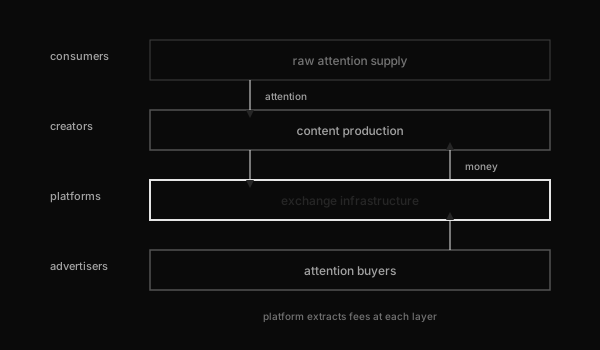
the platform layer
social platforms are the first true attention markets. they created the infrastructure for attention to be:
- measured precisely (impressions, engagement, reach)
- priced dynamically (ad auctions, CPM)
- transferred between parties (influencer deals, sponsored content)
- stored in accounts (followers as attention futures)
this wasn't possible before. attention existed, but it couldn't be traded efficiently. there was no clearing mechanism, no price discovery, no liquidity.
the platforms built the plumbing.
market participants
every market has participants. the attention market has:
creators — produce content that captures attention
aggregators — collect and package attention into addressable audiences
advertisers — buy attention and convert it to outcomes
platforms — provide the exchange infrastructure and take fees
consumers — supply the raw material (their attention)
notice who's missing from the value capture: the people whose attention is being traded.
price discovery
the most sophisticated attention markets have real-time price discovery. facebook's ad auction runs billions of times per day, finding the market-clearing price for every impression.
this is new. for most of history, attention pricing was opaque. you negotiated deals. you guessed at value. you couldn't compare prices across contexts.
now attention has a spot price. it fluctuates with supply and demand. it's affected by news cycles, seasonality, competition.
implications
if attention is a traded commodity:
- attention inequality will grow (markets create winners)
- attention capture becomes a professional discipline
- organic reach is a subsidy that can be withdrawn
- the platforms are the central banks of attention
we're still early in understanding what attention markets mean. but the infrastructure is built. the trading has begun.
the question now is who benefits from the liquidity.