the influencer to founder pipeline
when attention holders start launching, the whole game changes.
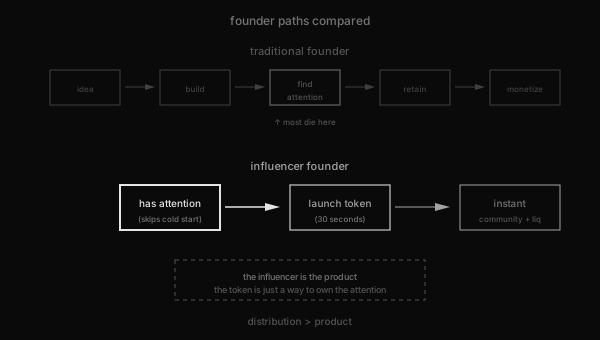
the traditional pipeline was: build something → get attention → monetize.
the new pipeline is: get attention → launch something → the attention is the product.
influencers became founders because they realized they were already holding the most valuable asset: distribution.
the old founder path
traditionally, starting a project meant:
- have an idea
- build a product
- find users
- retain users
- monetize
the hard part was step 3-4. getting attention. keeping attention. most projects die here.
the influencer advantage
influencers start at step 3. they already have attention. they skip the cold start problem entirely.
when an influencer launches a token:
- instant awareness (followers see it)
- instant community (followers become holders)
- instant credibility (track record is visible)
- instant liquidity (followers provide it)
the only thing they need is something to launch. and as we've established, that takes 30 seconds now.
why this works
it works because tokens don't need utility. they need:
- attention (influencer has this)
- narrative (influencer is the narrative)
- community (followers convert to holders)
- distribution (built-in)
the influencer is the product. the token is just a way to own a piece of the attention.
the alignment problem
there's a conflict of interest:
the influencer's reputation depends on appearing trustworthy. launching a token and dumping it destroys this. but the financial incentive to dump is massive.
most influencers resolve this by:
- genuinely believing (copium)
- holding through the dump (rare)
- building real utility (rarer)
- soft rugging over time (common)
the smart ones realize their attention is worth more than any single token launch. they play long games.
the inverse: founder to influencer
the reverse pipeline also exists. founders realize they need to become influencers.
building in silence doesn't work anymore. you need to build in public. be present on timeline. cultivate an audience.
the most successful founders are now influencers first, builders second.
attention as equity
this reframes what "founding" means:
- traditional equity = ownership of cash flows
- attention equity = ownership of distribution
distribution is arguably more valuable. cash flows can be competed away. attention is sticky.
when an influencer "founds" something, they're not really founding it. they're licensing their attention to it. the attention is the equity.
implications
if influencer-to-founder is the pipeline:
- attention accumulation is the new business development
- audience size > technical skills
- distribution is more defensible than product
- personal brand is the real equity
the game changed. the people with followers realized they were always the product. now they're capturing that value directly.
builders can keep pretending that product quality will win. the influencers are already on their third launch.