the meme supply chain
memes have a supply chain like any other product. understanding it reveals how culture actually moves.
i wrote about memes as containers five years ago. since then i've watched the supply chain become more visible.
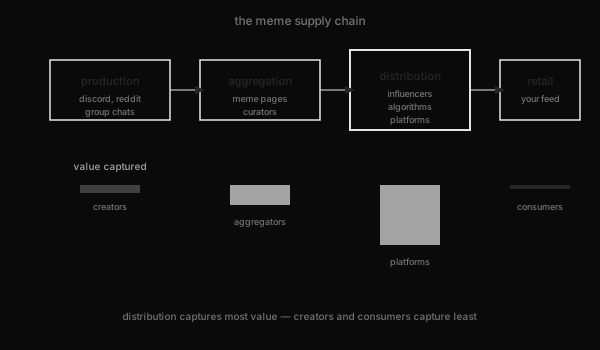
memes don't appear on your timeline by accident. they travel through infrastructure. there's sourcing, manufacturing, distribution, and retail. understanding this chain reveals how culture actually moves.
the production layer
memes are created in specific environments:
- discord servers
- subreddits
- obscure telegram groups
- group chats
- imageboards
these are the factories. the creators are usually not optimizing for virality—they're making content for their immediate community. the authenticity comes from this local focus.
the best memes emerge from genuine culture. forced attempts fail because they skip the production layer and go straight to distribution.
the aggregation layer
between creation and mass distribution sits aggregation. accounts and pages that collect, curate, and package content.
aggregators provide:
- quality filtering
- format standardization
- context removal
- audience matching
when you see a meme on instagram, it's usually been through several aggregators. each one strips context and adds reach.
the distribution layer
this is where scale happens. influencers, algorithms, repost accounts. the mechanisms that take content from thousands of views to millions.
distribution is where value gets extracted. the creator rarely benefits. the aggregator captures some margin. the platform captures the most—through ads, data, engagement metrics.
the retail layer
finally: your timeline. the moment of consumption. you see the meme, laugh (or don't), maybe share. you have no idea about the journey it took to reach you.
why this matters
understanding the supply chain explains:
- why "making a meme" usually fails — you can't skip the production layer
- who captures value — distributors win, creators lose
- how culture gets flattened — context stripping is built into the chain
- why platforms are powerful — they control the distribution infrastructure
the meme supply chain is a lens for understanding how all digital content moves. it's logistics for meaning. and whoever controls that logistics controls culture.
crypto implications
tokens and memes share distribution mechanics. both spread through networks. both require cultural production layers. both create value for distributors more than creators.
the interesting experiments are the ones trying to restructure the supply chain—giving creators more upside, reducing the aggregator tax, making distribution more direct.
that's what good tokenomics can do. it can reshape the meme supply chain economics.