the reply guy index
measuring influence through reply behavior reveals more than follower counts.
follower counts are vanity metrics. they tell you who someone has reached, not who they influence. i've been working on a better measure.
the reply guy index.
the hypothesis
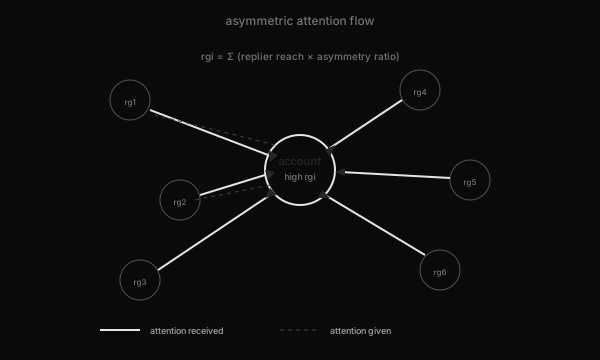
influence isn't about who follows you. it's about who responds to you. specifically: who consistently engages with your content without reciprocal engagement from you.
reply guys are signal. they indicate asymmetric attention—someone spending their attention on you without equivalent return. aggregated across many reply guys, this reveals influence topology.
methodology
for this research, i analyzed three months of crypto twitter data. the process:
- identify accounts in a given space (crypto, ai, etc.)
- for each account, map who replies to them
- filter for consistent repliers (>10 replies in period)
- weight by the replier's own reach
- calculate asymmetry ratio (their attention to you / your attention to them)
the reply guy index = sum of (replier reach × asymmetry ratio)
findings
the results were interesting:
follower count correlates weakly with reply guy index. some accounts with huge followings have low rgi—their followers don't engage. some accounts with modest followings have high rgi—they command disproportionate attention.
rgi predicts narrative influence. accounts with high rgi tend to set narratives. their posts get amplified by the reply network. ideas spread outward from them.
rgi clusters reveal communities. mapping who reply-guys whom shows community structure better than follower graphs. influence flows along reply edges.
rgi is leading indicator. changes in rgi precede changes in follower count. rising rgi signals growing influence before it shows in vanity metrics.
the data
top findings from crypto twitter sample (q2 2024):
| pattern | observation | |---------|-------------| | founder accounts | high followers, variable rgi | | researcher accounts | moderate followers, high rgi | | influencer accounts | high followers, high rgi | | bot networks | high followers, near-zero rgi |
the researchers were interesting. they often had outsized influence relative to their follower counts. their ideas spread through reply networks even without direct amplification.
applications
the reply guy index is useful for:
identifying actual influencers. people who command attention vs people who just have followers. useful for partnerships, deals, information flow analysis.
detecting bot networks. fake followers don't reply. accounts with high followers but zero rgi are suspicious.
mapping information flow. replies show how ideas spread. who replies to whom reveals the influence graph.
timing narratives. rising rgi on an account suggests they're about to set a narrative. useful for trading, marketing, research.
limitations
the methodology has gaps:
- doesn't capture lurkers (influential readers who don't reply)
- biased toward provocative content (controversy generates replies)
- platform-specific (twitter behavior doesn't translate directly)
- requires significant data access
still, it's better than follower counts. and it reveals structure that's otherwise invisible.
conclusion
influence is asymmetric attention. the reply guy index measures this directly. follower counts measure potential reach. rgi measures actual influence.
the reply guys know things. we should pay attention to where they pay attention.