the telegram coordination layer
the real game moved to private groups. telegram became crypto's coordination layer.
the timeline is where you perform. telegram is where you coordinate.
this split happened gradually, then suddenly. the real conversations—the alpha, the planning, the deals—migrated to private telegram groups. twitter became the public relations layer for decisions made elsewhere.
why telegram won
telegram has specific features that made it the coordination layer:
groups scale — you can have thousands in one chat
persistence — messages stick around (unlike discord's chaotic threading)
bots — automated tools, price feeds, alerts integrated into chat
pseudonymity — usernames without identity verification
speed — real-time, always on
global — no geographic restrictions
but the real reason is simpler: telegram is where the people with information already were. network effects did the rest.
the alpha hierarchy
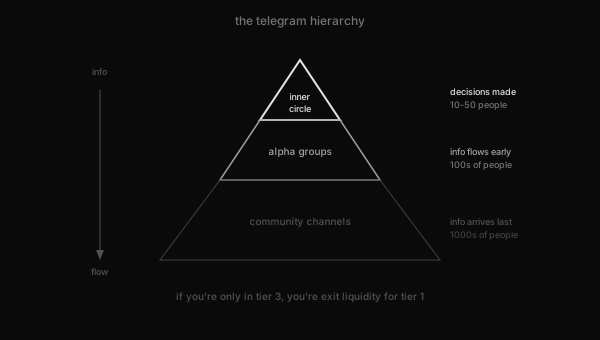
telegram groups have an implicit hierarchy:
tier 1: inner circles — founders, major holders, actual decision-makers. maybe 10-50 people. this is where things get decided before they're announced.
tier 2: alpha groups — good traders, researchers, mid-level connected people. hundreds of members. information flows here hours before public.
tier 3: community groups — official project channels. thousands of members. mostly noise, occasional signal. information arrives here last.
if you're in tier 3 only, you're exit liquidity for tier 1.
coordination mechanics
what actually happens in private telegrams:
- launch timing coordination ("we go at 3pm utc")
- narrative seeding ("push this angle")
- liquidity coordination ("i'll add X if you add Y")
- defense coordination ("we need to address the fud")
- exit coordination (the dark side)
the public timeline is theater. the telegram is the script.
the access game
access to good telegrams is a form of alpha in itself. this creates dynamics:
- people trade group invites like assets
- being "in the group" becomes a status marker
- information leaks become power plays
- kicked members become enemies
the social game around access is often more intense than the trading itself.
the problem with private coordination
private coordination creates problems:
- information asymmetry — insiders always have edge
- manipulation — coordinated groups can move markets
- exclusion — if you're not in, you can't compete
- accountability — no public record of what was said
this isn't new—traditional finance has always had private coordination. crypto just made it visible and democratized access to it (for some people).
implications
if telegram is the coordination layer:
- being in the right groups matters more than being smart
- relationships are alpha
- public analysis is for entertainment, not edge
- the timeline is a lagging indicator
the best traders aren't doing public analysis. they're in telegram groups you've never heard of, coordinating with people you'll never meet.
the game is access. everything else is cope.