token distribution as story design
how you distribute tokens isn't just economics. it's narrative architecture.
token distribution is usually framed as economics: vesting schedules, allocation percentages, emission curves. these matter. but they miss the deeper function.
distribution is story design.
the narrative layer
every distribution event tells a story. airdrops. launches. staking rewards. liquidity mining. each one creates a narrative:
- who are the protagonists? (early holders, builders, users)
- what is the journey? (discovery, accumulation, conviction)
- what's the reward structure? (early birds, loyal participants, risk takers)
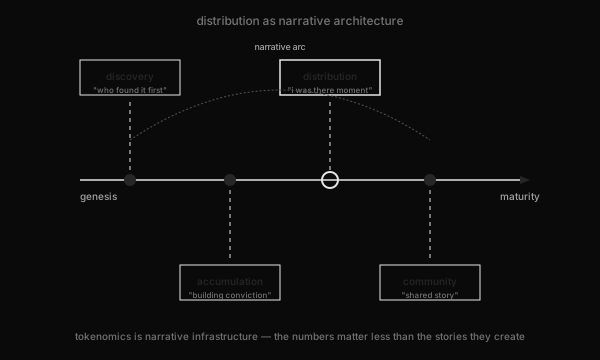
good distribution creates good stories. bad distribution creates resentment, confusion, or indifference.
case studies
bitcoin's distribution told a story of gradual discovery. early miners were explorers. the declining block reward created urgency. the narrative: "you should have been there earlier, but you can still join."
ethereum's ico told a story of collective founding. thousands of people participated in creating something new. the narrative: "we built this together."
uniswap's airdrop told a story of user ownership. if you used the protocol, you owned part of it. the narrative: "users are the real stakeholders."
solana's token distribution told a story of vc dominance at first, but the culture that emerged told a counter-story of scrappy builders. the narrative evolved.
each distribution created a different emotional architecture for the community that followed.
design principles
based on watching many distributions:
1. protagonists matter. who gets tokens first shapes the community's identity. if early holders are speculators, you get a speculator community. if early holders are users, you get a user community.
2. journey beats destination. the process of distribution matters as much as the final allocation. a fair launch creates different stories than a vc round into airdrop.
3. earned > given. tokens that feel earned create stronger attachment than tokens that feel given. create ways for people to earn their position.
4. mystery creates engagement. some uncertainty in distribution creates narrative tension. fully predictable distributions are boring. but too much uncertainty creates distrust.
5. timing shapes memory. when people get tokens affects how they remember getting them. market context matters. a distribution during euphoria feels different than during despair.
the research
i analyzed 50 token launches from 2020-2023. patterns emerged:
communities with the strongest culture had distributions that:
- created clear "i was there" moments
- rewarded specific behaviors, not just holding
- had at least one surprise element
- felt fair even to non-recipients
communities with the weakest culture had distributions that:
- were purely mechanical
- rewarded insiders disproportionately
- felt random or arbitrary
- created sharp divisions between haves and have-nots
implications
if you're designing token distribution:
- start with the story you want to tell
- design mechanics that create that narrative
- think about who the protagonists are
- create moments people will remember
- make participation feel meaningful
tokenomics is narrative infrastructure. the numbers matter less than the stories they create.